Barcode
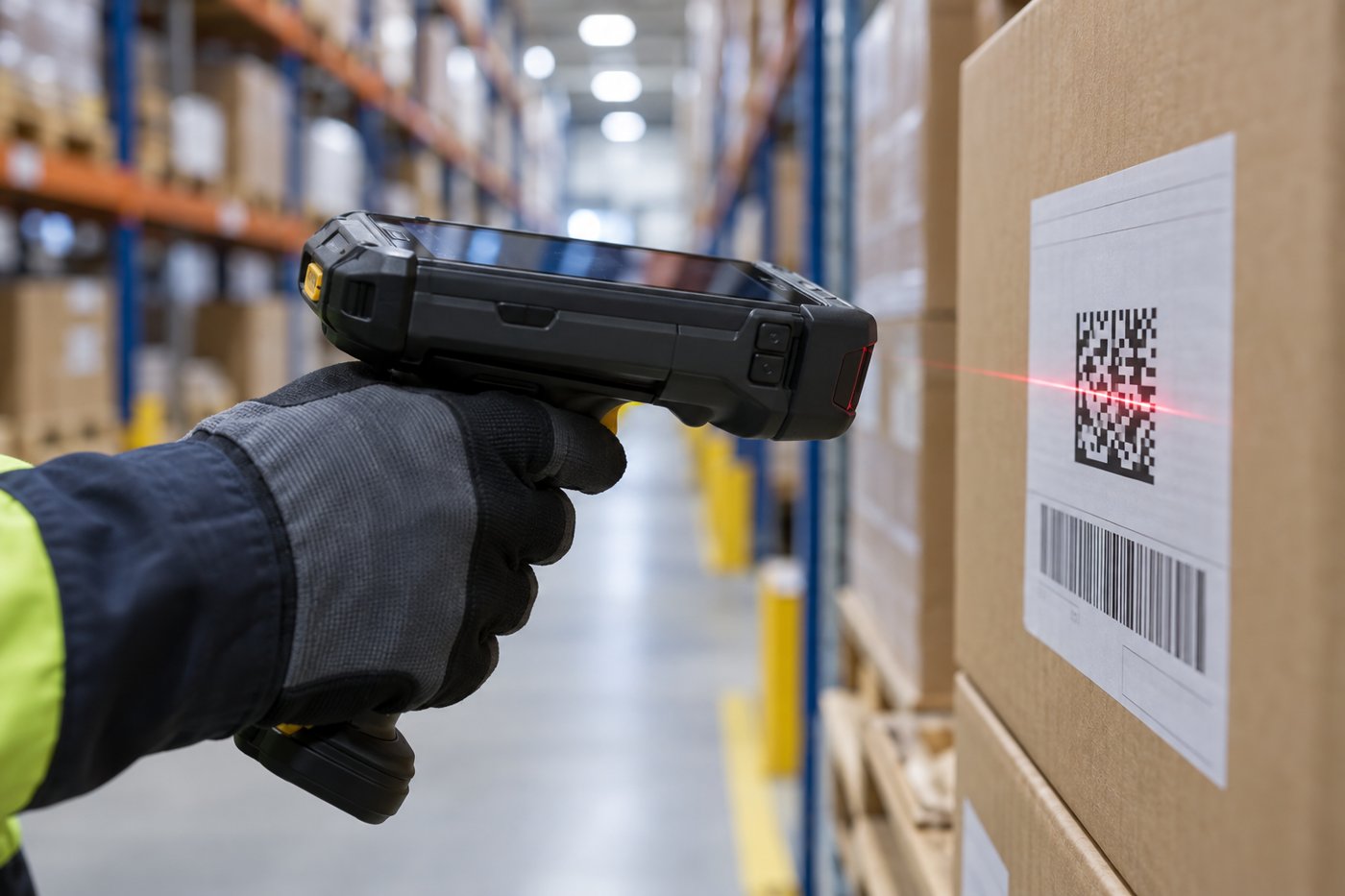
An optical data carrier: the reader scans it with laser or image-based technology.
Role: Identification
In short
A barcode is an optical data carrier: a laser or image-based reader scans the identifier.
History
The first commercial barcode scan at a supermarket checkout took place at a Marsh store in Ohio on 26 June 1974 and changed how shops handle checkout. Since then the barcode has become a general identifier from retail to logistics and healthcare. The currently most popular barcode, the QR, was introduced by the Japanese company DENSO in 1994 for industrial identification.
How it works
A 1D code consists of lines and spaces, a 2D code of a pattern of squares, dots or hexagons, so it holds more data in the same area. In the GS1 system a code can carry an identifier plus extra data such as a serial number, batch or date. Non-GS1 codes with their own symbology standards also exist.
Uses
Retailers, manufacturers, carriers and hospitals use barcodes to identify and track products. UPC/EAN is the retail marking, GS1-128 and ITF-14 are common in distribution, and DataBar can also hold extra data such as weight.
Advantages
Widely accepted, typically cheaper to print than an RFID tag, and it uses the same identification and data exchange standards as RFID. With a serial number it can identify a single item.
Limits
Optical reading needs a visible code, and print quality matters: missing dots can cause read errors and a glossy surface can reflect the laser beam. ISO/IEC 15416 describes measuring the print quality of linear codes.
Related
Passive RFID UHF and HF (complementary technologies), Machine Vision (image-based reading).