
Passive RFID: HF
Short-range RFID in the 13.56 MHz band, which includes NFC and MiFare.
Role: Identification
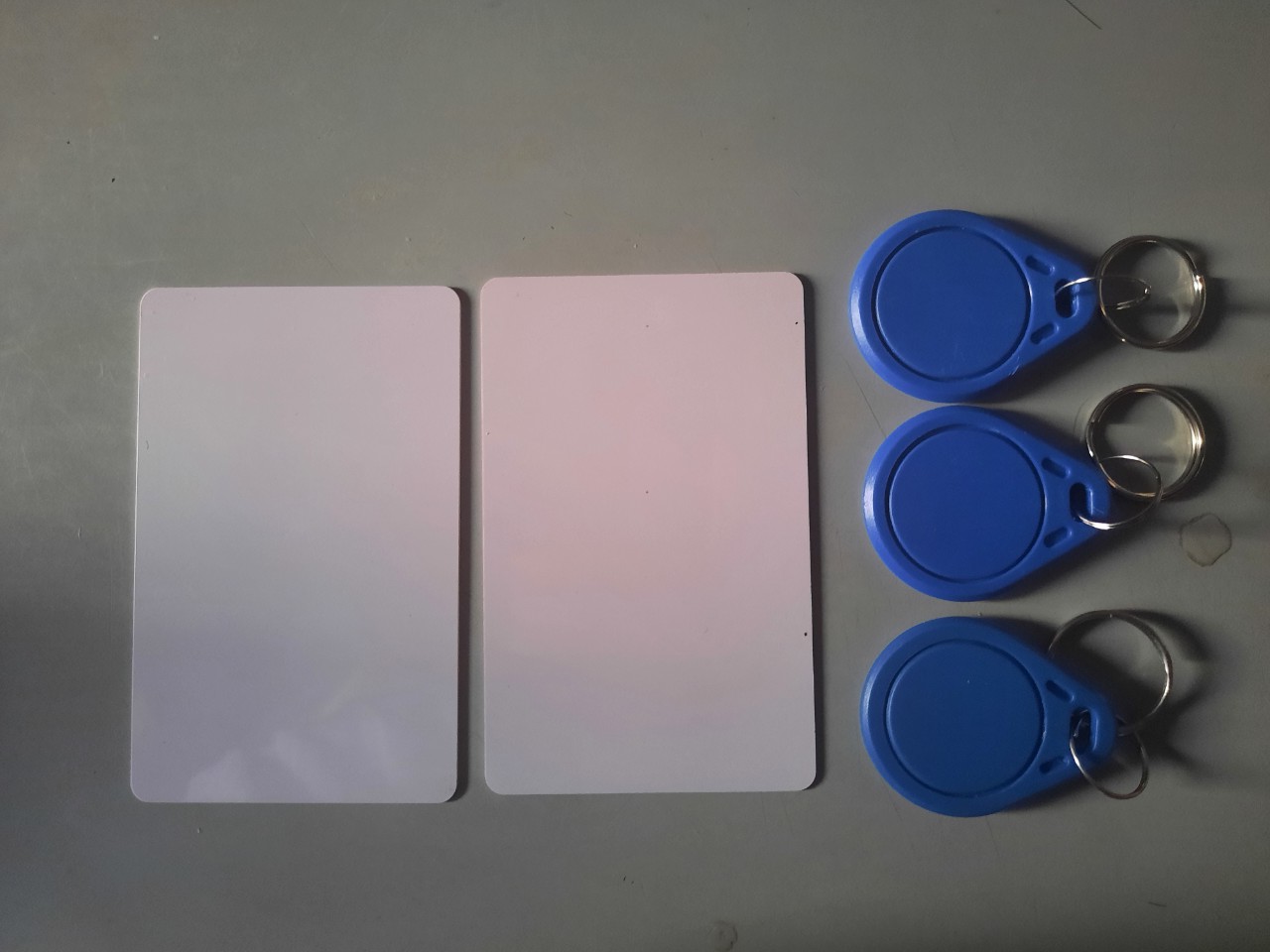
In short
Most HF RFID systems work at 13.56 MHz over a short range. NFC is a subset of RFID technology in the same band.
History
Several standard families coexist in the HF band: ISO/IEC 15693 and ISO/IEC 18000-3 for item tracking, ISO/IEC 14443 for contactless cards, ECMA-340 and ISO/IEC 18092 for NFC. So "HF" covers systems built for different purposes that are not necessarily compatible with each other.
How it works
The reader powers the tag by magnetic coupling. Range depends on the standard, antenna and reader. NFC is typically designed for a few centimetres of proximity, while ISO/IEC 15693 "vicinity" tags allow longer read distances of up to 1 m. NFC allows ad hoc communication in addition to reader/writer mode.
Uses
Ticketing and event tickets, payment, data transfer and secure documents such as e-passports, and item tracking under ISO/IEC 15693 and 18000-3. NFC is designed for applications such as contactless payment.
Advantages
HF is moderately sensitive to interference, and the short range gives a targeted, deliberate read. NFC is designed for applications where security and two-way data exchange may be needed; actual protection depends on the implemented application and protocol. A wide range of standards is available.
Limits
Its range is shorter than UHF, so it suits bulk reading without line of sight less well. Passive UHF tags are the most broadly implemented in the industries. The NFC specification assumes about 10 cm, so a longer-range ISO/IEC 15693 tag is technically not NFC, although NFC supports NDEF-formatted 15693 tags.
Related
Passive RFID UHF, Barcode, Active RFID overview.